
Highlights of the Economic Survey 2025-26
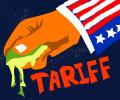
India must focus on building enduring national capabilities and economic sovereignty in the face of shrinking space for rules-based trading, anti-immigrant stance, weaponization of energy sources and growing use of export controls in critical sectors, the Economic Survey said on Thursday.

According to the Economic Survey 2026, the appropriate stance for 2026 is therefore one of strategic sobriety rather than defensive pessimism.

The value of the rupee, which has slipped to the 92 per dollar mark, does not accurately reflect India's stellar economic fundamentals, the Economic Survey said on Thursday.

The Survey is authored by Chief Economic Advisor V Anantha Nageswaran and his team.

Finance Minister Nirmala Sitharaman on Monday tabled the Economic Survey 2021-22 along with Statistical Appendix in the Lok Sabha on the first day of the Budget session of Parliament. Later, the Lok Sabha was adjourned till tomorrow. The Economic Survey will now be tabled in the Upper House. The Budget Session of the parliament commenced on January 31 with President Ram Nath Kovind's address. The first part of the Budget session of Parliament will be held from January 31 to February 11 and the second part of the Budget session will take place from March 14 to April 8.

Headline WPI inflation may decline between 6.2 to 6.6 per cent in March 2013.

Pakistan has increased its defence budget by 17.6 per cent to PKRs 3,000 billion for the upcoming fiscal year, as announced by Finance Minister Muhammad Aurangzeb. The federal budget, estimated at PKRs 18,771 billion, targets 4 per cent GDP growth, with significant allocations for debt service and pensions. Prime Minister Shehbaz Sharif highlighted economic stability and ongoing discussions with the IMF, while the opposition protested Imran Khan's incarceration during the budget session.
Survey likely to be tabled in July by the new government.
pbeat on the prospects of India's foreign trade contributing majorly to the economy, the Economic Survey on Wednesday cautioned against the negative impact of hardening of global oil prices and volatility among major currencies on country's exports.

The pre-budget Economic Survey, which is tabled in Parliament ahead of the Union Budget to present the state of the economy and suggest policy prescriptions, quite often misses on the GDP forecast, sometimes by a significant margin. This time, Finance Minister Nirmala Sitharaman will table the Economic Survey for 2021-22 in the Lok Sabha on Monday soon after the President's address to both Houses of Parliament. She will present the Union Budget for the next financial year beginning April 1, 2022, on Tuesday.
In recent years, as the number of government economic reports coming out in the weeks and months before the Survey has increased, its utility has diminished as a source of data and as the ministry's assessment of the state of the economy.
The Economic Survey on Thursday prescribed reforms in the subsidy regime in oil, food and fertiliser sectors and asked the government to review the possibility of direct cash transfer to the targeted people.
A day before unveiling the Budget, Finance Minister Pranab Mukherjee will table the Economic Survey in Parliament on Thursday which will take stock of the economy and also the impact of stimulus on industry.

India needs to sustain a GDP growth rate of 8 per cent to become a five trillion dollar economy by 2025, the Economic Survey has stated.
Outlining the roadmap to achieve 7-8 per cent economic growth on sustained basis, the Economic Survey on Wednesday indicated major initiatives in the Union Budget to overhaul tax system, slash deficit, contain prices and boost agriculture.
India's economic revival also depends on the government's capacity to push through some critical policy reforms in the coming months, says the Economic Survey 2008-09, which was\npresented by Finance Minister Pranab Mukherjee in Parliament on Thursday.

The Indian economy can contract by 7.7 per cent in current financial year ending on March 31 and the growth could be 11 per cent in the next financial year, according to the Economic Survey tabled in Parliament by Finance Minister Nirmala Sitharaman. The contraction in FY21 is mainly due to coronavirus (Covid-19) pandemic and the visible damage caused by the subsequent countrywide lockdown to contain it. The survey unveiled two days before the Union Budget is broadly in line with forecasts by the Reserve Bank of India (RBI) which has said it expected the country's GDP to contract by 7.5 per cent in the year ending March 31.
Claiming that the "downturn is more or less over", the pre-Budget Economic Survey today projected an optimistic 6.1 to 6.7 per cent growth in the next fiscal and made a strong call for cutting subsidises.
The Finance Minister Pranab Mukherjee on Monday tabled the Economic Survey for 2008-09 that prescribes doing away with cess, surcharges on taxes, including Fringe Benefit Tax, and sweeping refroms in areas like petrol pricing and financial sector.

Highlights of Economic Survey 2020-21, tabled in Parliament by Finance Minister Nirmala Sitharaman on Friday.

Principal economic advisor, Ila Patnaik, is coordinating the work on Economic Survey 2013-14.

Making a case for an optimal fiscal stance, the Economic Survey on Friday said growth leads to debt sustainability and not necessarily vice-versa. "This is because debt sustainability depends on the 'Interest Rate Growth Rate Differential' (IRGD) i.e. the difference between the interest rate and the growth rate in an economy. "With the Indian context of potential high growth, the interest rate on debt paid by the Indian government has been less than India's growth rate by norm, not by exception," it said.

Uptick in growth projected in second half of current fiscal based on 10 factors including higher FDI flows, build up of demand pressure, positive GST revenue growth
Ahead of the Budget 2009-10, the economic survey on Thursday suggested tax cuts and increase in government expenditure as part of another stimulus package to help the economy overcome the global shock.
Economic growth projected at 8.1 per cent in 2005-06.\nAgriculture growth at 2.3 per cent.

Recommending an end to all cesses and surcharges on taxes, and free pricing of fertiliser and fuel ahead of the Union Budget for 2009-10, the Economic Survey on Thursday suggested aggressive divestment and financial sector reforms to bring the economy back to high growth track.

The Economic Survey released before next year's Budget could become a single volume, reverting to the practice followed till FY14. "There is so much to write about the Indian economy's performance in the past year. "Most of the exciting themes will be covered in what used to be considered Part II," said a senior government official who is part of the preparations for the Survey.

The Survey adopts an unfettered approach in thinking about the appropriate economic model for India. This endeavour is reflected in the sky blue cover of the Survey, Chief Economic Adviser Krishnamurthy V Subramanian said.

The Economic Survey was tabled in the Parliament on Friday.

Finance Minister Nirmala Sitharaman will present the general budget in Parliament on February 1. The Budget session of Parliament begins on January 28 with President Droupadi Murmu addressing both houses.

Tax administration could be improved to reduce discretion and improve accountability

India needs to create buffers for future economic downturns.

Unlike the Advance Estimates which missed the impact of demonetisation, CEA's survey is likely to have a better take on Indian economy.
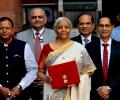
The Budget session of Parliament will be held from January 28 to April 2, featuring the President's address, the Economic Survey, and the presentation of the general Budget.

Diesel price needs to be revised upward, or subjected to higher taxes, as misuse of subsidized diesel was adding to pollution and public health costs, the government's pre-budget economic report card said on Thursday.
Diesel price needs to be revised upward, or subjected to higher taxes, as misuse of subsidized diesel was adding to pollution and public health costs, the government's pre-budget economic report card said on Thursday.

Enhanced revenue generation is a priority for the government.
Steps to be taken to achieve 7-8 per cent GDP growth.\n\nExpanding industry fast, by at least 10 per cent.
